
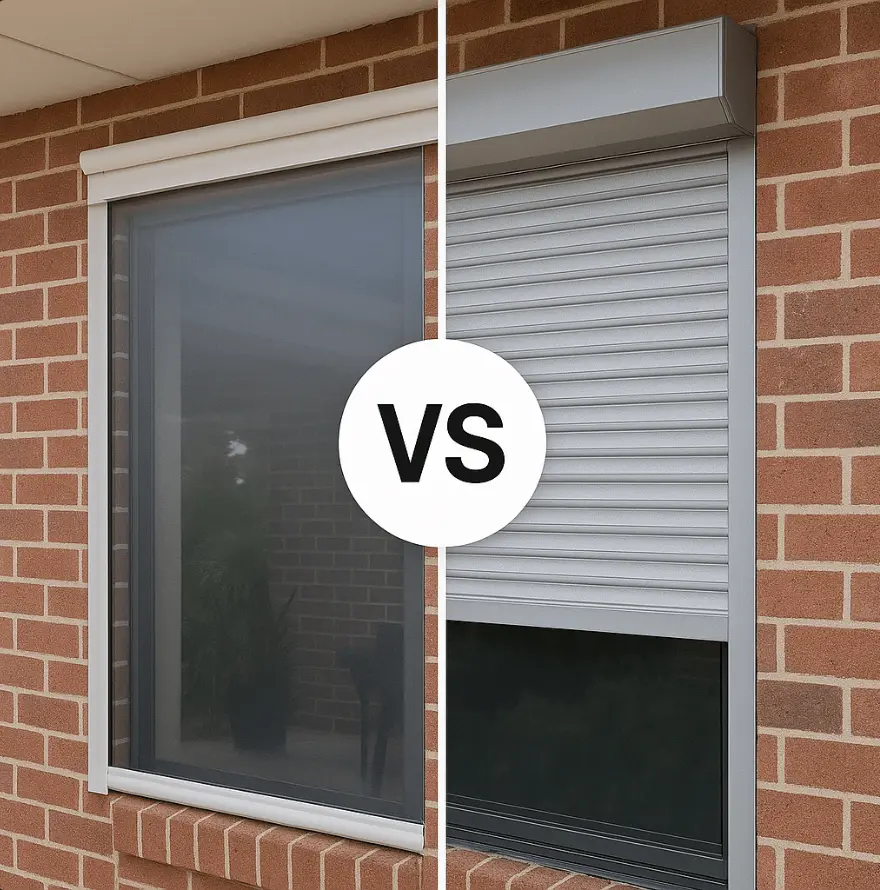
Roller shutters are one of the most versatile upgrades you can add to a home. They boost security, improve insulation, reduce noise, and give you complete control over privacy and light. But once you’ve decided to install them, the next big decision is choosing between manual and motorised systems.
Both options serve the same purpose — but they deliver very different experiences. This guide breaks down how each system works, the advantages of both, cost differences, long-term value, and which one best suits different types of homes.
Why Roller Shutters Are So Popular Today
Modern shutters do far more than people realise. They help regulate indoor temperatures, block out early morning light, soften street noise, and add a physical barrier to the home. For many homeowners, they’re a long-term investment in comfort, safety, and energy efficiency.
The choice between manual and motorised systems usually comes down to lifestyle, usability, and budget — not the shutter itself.
How Manual Roller Shutters Work
Manual shutters operate using either a pull strap or a winder system inside the home. You turn the winder or pull the strap to raise and lower the shutter.
Advantages
- Lower upfront cost
- No wiring or electrical work needed
- Simple mechanism with fewer components
- Reliable for smaller windows
- Will still open/close during a power outage
Limitations
- Can be tiring or inconvenient to operate
- Not suitable for large, heavy shutters
- Slow to open multiple shutters each morning
- Harder for older adults or people with mobility issues
- Visible winder box inside the room
Manual shutters work well for small windows, especially on ground floors or investment properties.
How Motorised Roller Shutters Work
Motorised shutters use a built-in tubular motor that lifts and lowers the curtain at the push of a button. They can be controlled by a wall switch, remote, smartphone, or even voice assistants.
Advantages
- Extremely easy to operate
- Perfect for large or heavy shutters
- Cleaner interior appearance
- Can be grouped together for one-touch control
- Works with timers, sensors, and smart home systems
- Ideal for double-storey homes
- Quieter, smoother operation
Limitations
- Higher initial cost
- Requires power connection or battery motor
- Motor may need replacement after a decade or more
Motorised shutters are the standard for modern homes, particularly when convenience or large window spans are involved.
Manual vs Motorised: Side-by-Side Comparison
| Feature | Manual | Motorised |
| Upfront Cost | Lower | Higher |
| Ease of Use | Moderate/Hard | Very Easy |
| Speed | Slow | Fast |
| Best for Large Windows | No | Yes |
| Interior Aesthetic | Winder box visible | Clean, seamless |
| Elderly-Friendly | No | Yes |
| Smart Home Compatible | No | Yes |
| Power Needed | No | Yes (or battery) |
| Maintenance | Very low | Low |
Cost Differences You Can Expect in 2025
Prices vary depending on window size, installation complexity, colour, and profile type, but a general guide looks like this:
Manual Shutters
- More affordable
- Ideal for budget-conscious installations
- Best suited to small windows
Motorised Shutters
- Higher initial investment
- Worth it for everyday usability
- Excellent for bedrooms, living rooms, and upper storeys
- Battery motors offer an option without adding wiring costs
The long-term value of motorised shutters typically outweighs the upfront cost for most homes.
Which One Is Better for Your Home?
Choosing between manual and motorised depends on how you plan to use the shutters and the type of home you live in.
Ground-Floor Homes
- Manual is fine for small windows
- Motorised recommended for main living areas and bedrooms
Double-Storey Homes
- Motorised is almost always the better choice
- Operating manual shutters upstairs is inconvenient and slow
For Seniors or Busy Families
- Motorised is safer, easier, and more practical
- No physical effort required
For Large Window Spans
- Motorised is the only feasible option
For Rentals or Investment Properties
- Manual shutters provide good value
Security Differences
Both systems offer the same level of physical security because the shutter curtain and tracks are identical. The difference is operational speed and convenience.
Motorised shutters often have stronger internal locking positions and can be closed immediately in emergencies — useful during storms or unexpected situations.
Insulation & Energy Savings
One of the biggest benefits of roller shutters is temperature control. They reduce heat entering the home in summer and help retain warmth in winter. Motorised and manual shutters perform equally well here — the difference lies in usability.
Motorised shutters make it easier to close them at the right times (such as before the afternoon sun hits), which leads to better long-term energy efficiency.
Maintenance & Lifespan
Both systems require minimal upkeep — mainly cleaning the guides and ensuring debris doesn’t build up.
Manual shutters have simpler mechanics, while motorised shutters rely on their motor, which may need replacement after 10–15 years. Outside of that, both systems are durable and long-lasting when installed correctly.
Final Verdict — Manual or Motorised?
If you’re looking for the best long-term experience, motorised shutters win. They’re convenient, stylish, easy to use, and ideal for most Perth homes — especially those with multiple shutters, large windows, or upper storeys.
Manual shutters still have a place for smaller windows or budget-conscious projects, but they lack the everyday ease that homeowners quickly grow to appreciate.
In the end, the right choice depends on your home layout, lifestyle, and how often you plan to use the shutters.
Quick Checklist Before Choosing
- How many windows are you covering?
- Are any on the second storey?
- Do you want smart home or timer control?
- Do you prefer a clean interior look?
- Do you want group-control (open all at once)?
- Is the shutter large or heavy?
- What is your long-term budget?
Answering these questions will help you choose the system that suits your home best.